Note
Meeting Date Change for June
Due to and in respect for Fathers Day
Our next meeting date is the fourth Sunday in June. Our
meeting will be
|
Welcome to CACHE, Chicago's first computer user group.
Founded in 1975 to explore and learn the science and art of desktop computing,
CACHE is now the second oldest computer users group in the country.
Our members' systems are
predominately IBM compatibles and are used at home and business settings. We
range from novice to expert and from amateur to professional.
At most meetings, in addition to interesting presentations, you'll get a
chance to ask questions and get help from other members.
We welcome guests to all our meetings and we look forward to your becoming a
member of our organization.
|
|
|
Guests are welcome to all meetings which are held the
3rd Sunday of each month.
Note: Our next meeting is June 22,
2018.
Our meeting will be held at:
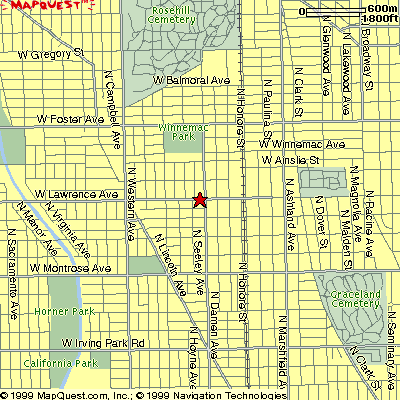
Northeast Levy Senior Center - Map
- Map
2019 W Lawrence Ave
Chicago, IL 60625
(SW Corner of Damen & Lawrence)
Parking:
Just west of the building, enter from Lawrence Ave
Breakfast: 8:00 AM
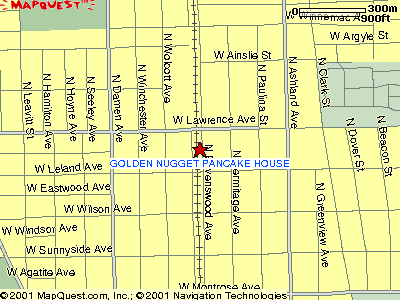
Golden Nugget Pancake House
4747 N Ravenswood Ave
Chicago, IL
(773)769-6700
(East of the Levy Center on Lawrence on the south side of the
street just east of the railroad overpass.) Restaurant
Map
|
|